
A hospital elevator, also known as a medical elevator, is a specialized type of elevator designed to meet the unique requirements of healthcare facilities such as hospitals, clinics, and medical centers. These elevators are specifically designed to accommodate the transportation of patients, medical staff, and various medical equipment within the hospital building.
Hospital elevators typically have several distinguishing features:
-
Spacious and wheelchair-accessible: Hospital elevators are designed to accommodate stretchers, wheelchairs, and medical equipment. They have larger dimensions compared to standard passenger elevators to provide ample space for movement and maneuverability.
-
Smooth and quiet operation: Hospital elevators are built with a focus on minimizing vibrations and noise levels. This is important to ensure patient comfort, reduce stress, and maintain a calm environment within the hospital.
-
Bed and stretcher compatibility: Hospital elevators are equipped with features such as collapsible handrails and folding seats to accommodate stretchers and hospital beds. These features allow medical staff to safely and efficiently transport patients between floors.
-
Specialized controls and functionality: Hospital elevators often have unique control systems that include additional buttons or features. For example, they may have separate controls for emergency personnel, priority call buttons for critical patients, or code-compliant braille markings for visually impaired individuals.
-
Enhanced safety features: Safety is a critical consideration in hospital elevators. They are equipped with features such as emergency communication systems, backup power supply, and smooth door operations to ensure the safety and well-being of patients and staff.
-
Infection control measures: Hospital elevators may incorporate specific features to maintain hygiene and prevent the spread of infections. These can include antimicrobial surfaces, hands-free operation, and easy-to-clean materials.
-
Integration with hospital systems: Modern hospital elevators may be connected to the hospital’s computerized systems, allowing for efficient management, monitoring, and control of elevator usage, maintenance, and performance.
Overall, hospital elevators are designed to provide safe, efficient, and comfortable transportation for patients, medical staff, and equipment within healthcare facilities. They are tailored to meet the unique needs and demands of the healthcare environment, ensuring smooth and reliable vertical mobility.
HOSPITAL ELEVATORS - SAMPLE DRAWING
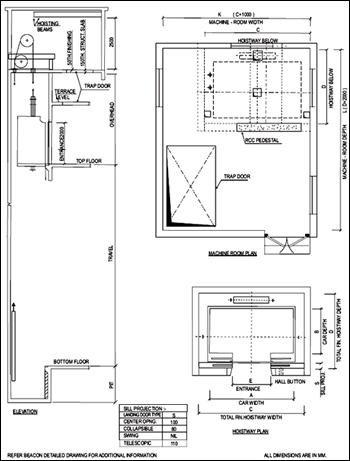
HOSPITAL ELEVATORS - DIMENSION
 |
|
||||||||||||||||||||||||||||||||||||||||||||||||||||||||||||||||||